About porcelain
25 de December de 2025In the workshop, the porcelain does not arrive white. It arrives earthy, somewhat rough, with the texture of something that has not yet found its form. Hands mix it, knead it, moisten it. There is something hypnotic about this repetition and the concentrated silence of those who know the material by heart.
It possesses a quality that escapes the obvious. Born of the alchemy between earth, water and fire, it embodies an unlikely balance between delicacy and strength. Its cool touch, its serene whiteness, its restrained shine: everything about it speaks of a stillness that has survived centuries of transformation.

Its nobility demands respect. It does not tolerate shortcuts or distractions. The value lies in the process: in the waiting, in the fire that defines its character, in the small imperfections that make it unique.
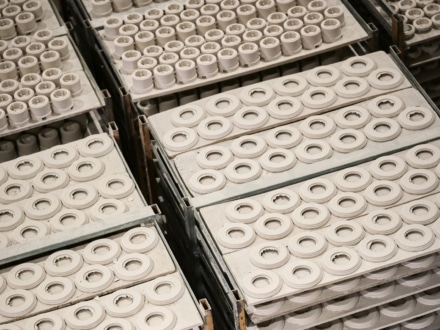
“Each piece passes through many hands before becoming a Fontini mechanism. Hands that understand that a job well done is built without haste and with a great deal of patience.”

There is something deeply meditative about working with it. Its timeless character is nourished by contrast: it is firm yet light; simple yet sophisticated; pure yet imperfect in its humanity. In it we find a mirror of the very act of designing: a practice that demands perseverance, sensitivity and a silent understanding of materials.
In our workshops, we continue to mould porcelain as it was done in the past, but with an eye on the present. Between traditional tools and precision machinery, each step of the manufacturing process seeks a balance between craftsmanship and design. It is not just about creating an object: we want you to perceive something more than its function when you touch it; a sense of continuity, of time contained in the material.


Porcelain is, after all, a beautiful paradox: hard and delicate, classic and modern, fragile and resistant. It combines centuries of history with the curiosity of the present. Its whiteness is not coldness; it is calm. Its shine is not artifice; it is honesty. Perhaps that is why it continues to fascinate us after more than seventy years of working with it. Because it speaks of a way of doing things that has not surrendered to speed, of a type of beauty that does not impose itself.
In the workshop, when a batch is ready, you can feel the shared pride. And in that moment, amid the white dust and the smell of the dying fire, we understand why we continue to choose this material: because in its apparent fragility there is something deeply human.

