In praise of wallpaper
More dresses, furniture and decorative whimsies were designed for Marie Antoinette than for any other queen of France. Among them were wallpapers created specifically for her private rooms at Versailles: scenes of birds, floral branches and distant landscapes that were a gesture of intimacy rather than a statement of power. In reality, these murals had little to do with excess and much to do with the value placed on craftsmanship.
She was not the only historical figure seduced by wallpaper. In England, for example, William Morris turned it into an aesthetic and political statement: a rejection of mass production and a return to traditional crafts. In the United States, as early as the 19th century, wealthy families hung imported wallpaper as a symbol of cultural progress. Even in Japan, during the Edo period, byōbu (hand-painted screens on paper) served as a kind of elegant predecessor to wallpaper, separating spaces with natural scenes that told stories.
“It was no coincidence that many of these motifs originated in the East. The first hand-painted wallpapers emerged in China, where rice and silk were used as a medium for natural compositions that combined precision and delicacy. By the time they reached Europe in the 17th century, they were already replacing decorated wooden panels and bringing a new visual depth to stately homes. The absorption of pigment, the vividness of colour and the level of detail made wallpaper a key feature in the most sophisticated interiors.”


The Industrial Revolution democratised its use and turned it into an everyday item. However, the tradition of painting it by hand never disappeared. Today, historic workshops and contemporary artists continue to favour papers that move away from digital repetition and recover the irregularity that makes each design unique. It is a commitment to what cannot be accelerated: time, the gesture and the gaze of the craftsman.
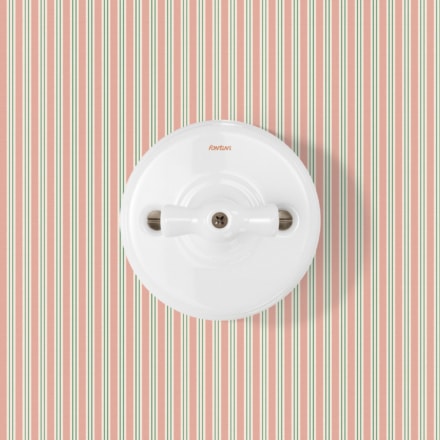
Perhaps that is why wallpaper continues to be so popular today. It covers a wall and creates a cultural framework within the space, an atmosphere that speaks of history, taste and character. In this sense, it shares the same logic as Fontini’s handcrafted mechanisms: pieces designed to accompany, without imposing themselves; to add texture and identity through discretion. Ultimately, both a wall and a switch can be places where craftsmanship finds its home.

